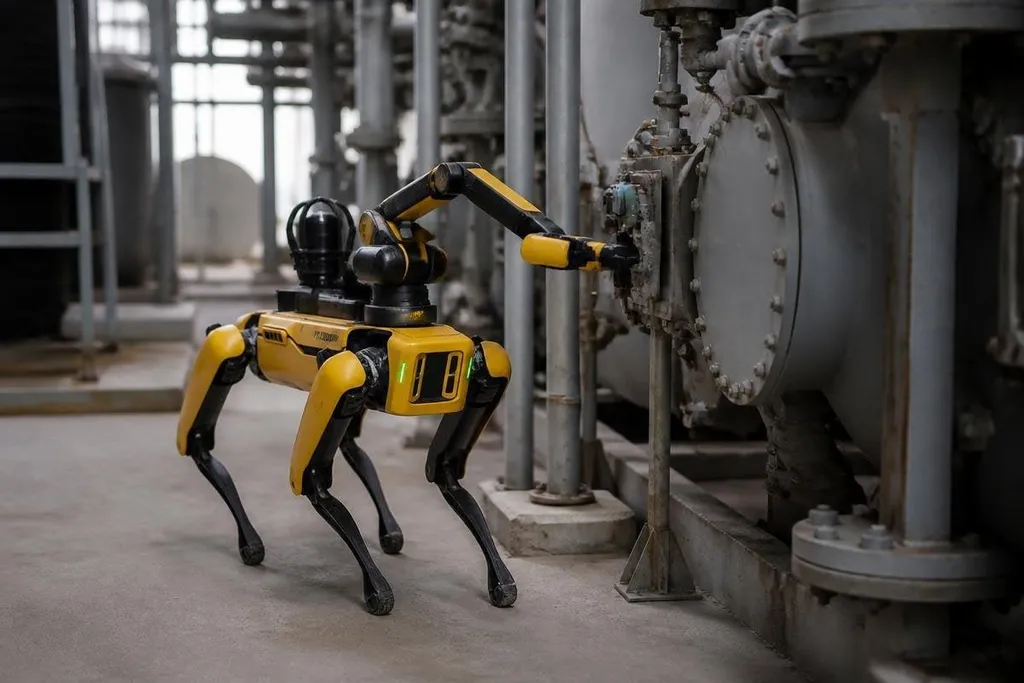
A maintenance robot has to find a fault, reach it, and leave the asset in better working order. That sounds modest until the robot meets dust, poor lighting, tight access, or a part that does not match its digital model.
For an engineering manager weighing an automation project, the race matters for one reason: which systems can reduce inspection and repair work without adding another machine for people to supervise?
- Inspection needs repeatable readings, not a polished demo.
- Repair work adds force, tool changes, and safety limits.
- The useful test is the full task, from arrival to verified handover.
Maintenance is a hard robot job
Factories, power sites, transport systems, and large buildings all need regular checks. The work may involve reading gauges, scanning surfaces, finding leaks, checking fasteners, or moving through areas that are unsafe for long human visits. Each task has a different sensing and movement problem.
A camera can spot surface damage. Thermal imaging can show a hot bearing or electrical connection. LiDAR, which measures distance with laser pulses, can help a robot build a map of its route. None of those tools fixes the fault by itself.
That gap matters. An inspection robot can return a report and still leave a technician with the repair, the access problem, and the risk. A repair robot needs a gripper or tool that can apply force while its body stays stable. It also needs a clear way to stop when the part, surface, or force falls outside its limits.
The race is about the whole work cycle
A good system must connect several steps that are often shown separately. It has to travel to the asset, identify the correct component, read its condition, choose a safe action, and record what happened. A failure in any one step can erase the time saved by the others.
That is why a robot that moves well in a test area may still have little value on a plant floor. Its route may change after a pallet moves. A reflective pipe may confuse a sensor. A damaged label may stop the robot from confirming which valve it has reached.
The next technician needs more than an alert. Maintenance software should carry the asset name, fault, images or readings, and work still waiting for a person. Robot24.com maintenance robot reports can put those field details beside a deployment claim, so you can judge the robot by measured task results rather than its sales copy.
What better maintenance performance looks like
The word “better” needs a task beside it. A system may move faster but produce poor readings. Another may inspect fewer assets per shift but find faults that people miss. The right measure depends on the cost and risk of the work.
Useful measures include:
- Finding faults: how often the robot spots a known problem without raising too many false alarms.
- Repeating routes: whether it reaches the same inspection points after the site changes.
- Handling tools: whether it can pick, place, connect, or turn the tool required for the job.
- Working safely: how it detects people, unexpected movement, heat, pressure, and loss of control.
- Closing the task: whether the system records proof that the inspection or repair finished.
These measures also expose weak demos. A short clip may show a robot gripping a part, but it may not show tool alignment, failed attempts, recovery, or the record sent to the maintenance team.
Where the hard limits remain
Repair work needs contact with the world. Sensors can locate a bolt, but the robot still has to deal with rust, damaged threads, seized covers, and parts installed at odd angles. Those conditions are difficult to predict from a clean model or a planned route.
Remote control can help when the robot cannot decide alone. It also shifts work to a person who watches video, selects actions, and takes over during failure. That may still reduce exposure to heat, height, radiation, or confined spaces, but the project must count the remote operator’s time.
Maintenance teams also need service plans for the robot itself. Cameras get dirty. Batteries lose capacity. Wheels, seals, cables, and gripper pads wear out. A machine that needs frequent attention may move the maintenance burden rather than cut it.
A practical buying check
Before approving a pilot, ask these questions:
- Name the exact asset and fault the robot must handle.
- Record the human steps, including setup, access, repair, and sign-off.
- Test the system on dirt, poor light, blocked paths, and damaged labels.
- Count remote-control time and technician time beside robot operating time.
- Set a pass rule for fault detection, safe stops, and task records.
I'd skip any system whose maker can show movement but cannot show a complete maintenance record for a real task.
The next useful proof will come from full work cycles: arrival, inspection, action, recovery from a fault, and a record that a maintenance team can use. Until makers show that chain under site conditions, the race remains a contest in demonstrations rather than a clear gain for the people who keep equipment running.